ABC with Sprouted Ragi: Benefits, Uses, and Why It's a Nutritious Choice
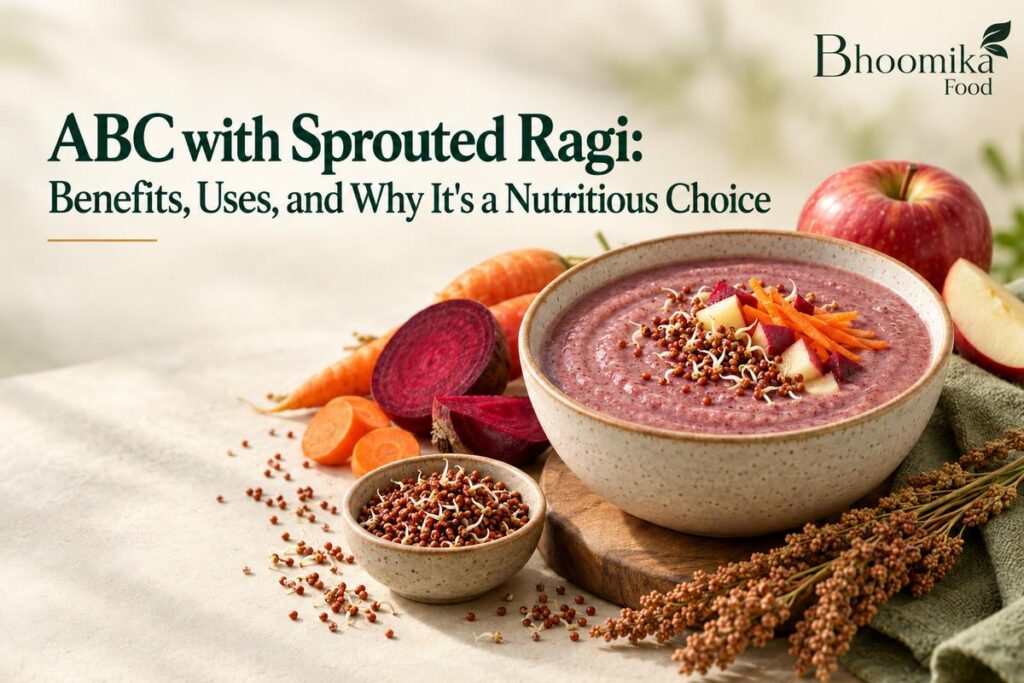
Ragi has been trusted by Indian mothers for generations, and this trust has not come from tradition alone. Long before modern nutrition science explained why ragi was so valuable, it was already being fed to babies, growing children and new mothers across the country, simply because it worked well and sat gently on a young digestive system. When this same ragi is sprouted and combined with apple, beetroot and carrot, an even more powerful blend is created — one that is genuinely considered an easy digestible ragi food for babies and young children alike, such as our ABC with Sprouted Ragi mix .In this blog, the benefits, uses and overall value of ABC with sprouted ragi are explored in detail, along with the reasons this particular combination has become such a trusted choice for families looking for gentle, wholesome nutrition.
What Makes Sprouted Ragi Different from Regular Ragi?
Sprouting is a natural process where ragi grains are soaked and allowed to germinate slightly before being dried and ground into powder. This simple step changes the nutritional profile of ragi quite significantly. During sprouting, certain enzymes are activated, and these enzymes are known to break down complex compounds such as phytic acid — a compound that normally makes it harder for the body to absorb minerals like iron and calcium. Independent research on germinated grains confirms that sprouting significantly reduces phytic acid while increasing the bioavailability of iron, zinc and calcium (see this study on germination and mineral bioavailability).
Because of this, sprouted ragi is considered far easier to digest compared to regular, unsprouted ragi flour. Nutrients are absorbed more efficiently, and the strain placed on a young or sensitive digestive system is noticeably reduced. This is exactly why sprouted ragi has earned its reputation as an easy digestible ragi food for babies, since it offers all the nutritional strengths of ragi without the digestive heaviness that unsprouted grains can sometimes cause.
Why Apple, Beetroot and Carrot Are Added to Sprouted Ragi
While sprouted ragi alone is nutritious, the addition of apple, beetroot and carrot rounds out the blend in ways that ragi cannot achieve on its own. Apple contributes natural sweetness and gentle fibre, which makes the final mix more palatable, especially for babies who are just being introduced to solid foods. Beetroot adds iron and folate, supporting healthy blood development at a stage when rapid growth places high demands on the body. Carrot brings beta-carotene, which the body converts into vitamin A — a nutrient the NIH Office of Dietary Supplements notes is important for normal vision, immune function, and growth and development.
When these three are combined with sprouted ragi, a genuinely complete food is formed — one that touches on energy, digestion, blood health and immunity all in a single, easy-to-prepare mix. You can browse our full range of fruit and vegetable-based baby foods if you’d like to explore similar blends.
Key Benefits of ABC with Sprouted Ragi
1. Gentle on Digestion
Since the sprouting process reduces anti-nutrients like phytic acid, this blend is significantly gentler on the stomach compared to regular flour-based foods. This is one of the biggest reasons it is recommended as an easy digestible ragi food for babies, particularly during the early stages of weaning), when a baby’s digestive system is still developing.
2. Rich Source of Calcium
Ragi is well known among Indian grains for its high calcium content, and this remains true even after sprouting. Strong bone development is supported during a stage of life when a baby’s skeletal growth is happening rapidly, making this an especially valuable nutrient at this age.
3. Supports Healthy Iron Levels
Iron from both sprouted ragi and beetroot works together to support healthy hemoglobin levels. This is particularly important for babies and toddlers: research published in Pediatrics has found that iron deficiency anemia in infancy is linked to measurable effects on cognitive function, underscoring why adequate iron intake matters so much at this age.
4. Improved Nutrient Absorption
Because sprouting breaks down compounds that typically block mineral absorption, the body is able to make better use of the calcium, iron and other minerals present in this blend. This is a key advantage that sets sprouted ragi apart from regular ragi flour, and it directly supports the growth needs of a developing child.
5. Natural Energy Without Heaviness
Unlike some processed baby foods that rely on added sugars for taste, this blend offers natural sweetness from apple, paired with the slow-releasing energy of ragi. A steady, gentle source of energy is provided, without the heaviness that can sometimes come from denser, unsprouted grain-based foods.
6. Supports Immunity and Skin Health
Beta-carotene from carrot, along with the antioxidants naturally present in beetroot, supports a young immune system during a stage when babies are especially vulnerable to infections. Vitamin A in particular plays a well-documented role in maintaining the body’s epithelial barriers and immune cell function. Healthy skin development is also supported by these same nutrients.
7. A Trusted, Natural Choice for Weaning
Since all the ingredients used are natural, and the sprouting process is a traditional method rather than an artificial one, this blend is often preferred by parents who want to avoid processed baby foods filled with preservatives or added sugars. It offers a genuinely wholesome alternative that fits comfortably into a baby’s early feeding journey, in line with the WHO’s guideline on complementary feeding, which recommends nutrient-dense, minimally processed foods alongside continued breastfeeding from 6 months onward.
How ABC with Sprouted Ragi Can Be Used
This blend is versatile, and it can be prepared in several ways depending on a baby’s age and stage of feeding.
- As a smooth porridge: For younger babies just starting on solids, the powder is mixed with warm water or milk to form a smooth, semi-liquid porridge that is easy to swallow.
- As a thicker meal: For slightly older toddlers, less liquid is used, creating a thicker consistency that can be eaten with a spoon as a small meal.
- Mixed into regular meals: A spoonful can be stirred into a toddler’s regular khichdi or dal , adding extra nutrition without changing the taste too drastically.
- As a warm drink: For older children and even adults, the powder can simply be mixed with warm milk and enjoyed as a nutritious beverage.
This flexibility is one of the reasons this blend continues to be relevant well beyond the weaning stage, since it can grow along with a child’s changing dietary needs.
A Simple Preparation Guide
For Babies Starting Solids (Around 6 to 8 Months) A small amount, roughly half a teaspoon to one teaspoon, is mixed with warm water or breast milk to form a thin, smooth porridge. It should be introduced gradually, starting with a small quantity, and any reaction should be watched closely over the following days. This aligns with the age range the WHO recommends for introducing complementary foods while continuing to breastfeed.
For Toddlers (1 Year and Above) One to two teaspoons are mixed with warm milk or water to form a slightly thicker consistency, which can be eaten as a small breakfast or snack.
General Tips Warm liquid is generally preferred, since it helps the powder dissolve more smoothly and brings out the natural flavours of the sprouted ragi and fruits. Stirring gradually, rather than adding all the liquid at once, helps prevent lumps from forming. The powder should always be stored in a cool, dry, airtight container to preserve its freshness — see our storage and shelf-life guide — and any leftover mixed portion should not be stored for later feeding.
Why This Blend Is Considered a Nutritious Choice
When the combination of gentle digestibility, calcium, iron and natural sweetness is considered together, it becomes clear why this blend has earned such strong trust among parents. Very few foods manage to be both nutritionally dense and genuinely gentle on a baby’s stomach at the same time, and this is precisely what makes sprouted ragi, combined with apple, beetroot and carrot, such a valuable addition to early feeding routines. As an easy digestible ragi food for babies, it checks the boxes that matter most at this stage — nutrition, digestibility and natural ingredients, all without unnecessary additives.
A Few Precautions Worth Remembering
While this blend is generally considered safe and beneficial, a few precautions are worth keeping in mind. Any new food, including this one, should be introduced gradually, starting with a very small quantity, so that any allergic reaction can be identified early. A pediatrician should always be consulted before introducing solids or new foods to a baby, particularly if there is a family history of food allergies — the Indian Academy of Pediatrics is a useful resource for India-specific feeding guidance. As babies grow, quantities should be adjusted under medical guidance rather than increased arbitrarily.
Final Thoughts
ABC with sprouted ragi brings together the time-tested benefits of sprouted grain with the fresh nutrition of apple, beetroot and carrot, resulting in a blend that is both wholesome and remarkably gentle on young digestive systems. Calcium, iron, natural energy and immune support are all offered in a single, easy-to-prepare mix, making it a genuinely valuable addition to a baby’s early feeding journey.
For parents searching for a truly easy digestible ragi food for babies, this blend offers a natural, trusted option that has stood the test of time, now made even more convenient for the pace of modern family life. Explore our full baby food range to find more gentle, natural options for your child’s feeding journey.
