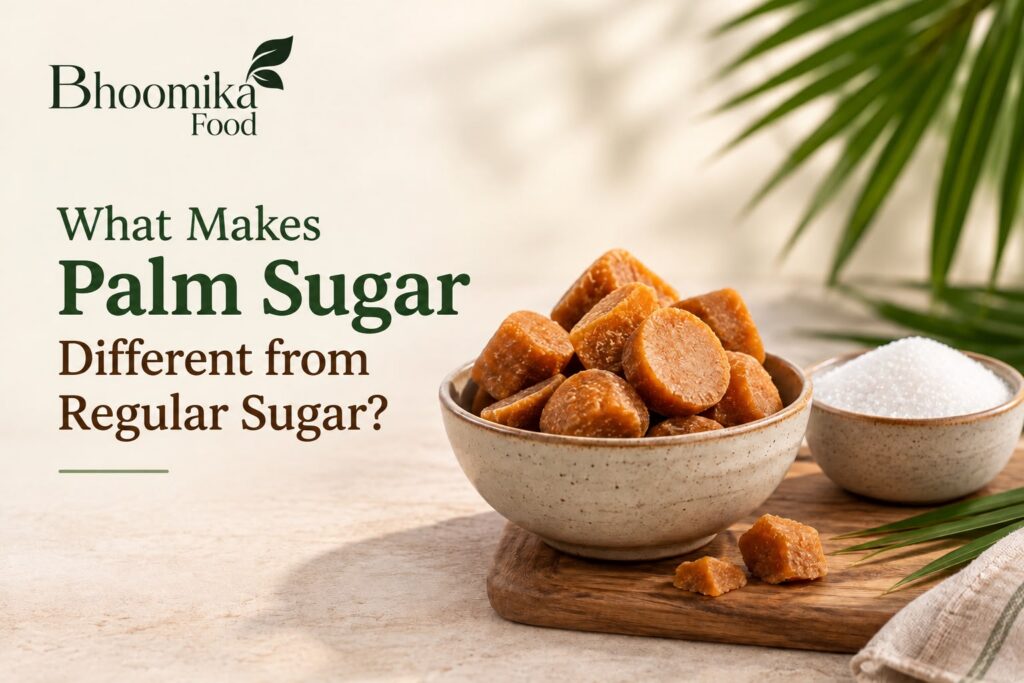
What Makes Palm Sugar Different from Regular Sugar?
Sugar is sugar, or so it may seem at first glance, but a closer look at how different sweeteners are made and how they affect the body reveals some genuinely important differences. Palm sugar, made from the sap of palm trees, has been used across parts of Asia for centuries, long before refined white sugar became the dominant sweetener in most kitchens. As more people look for natural alternatives that are gentler on the body, palm sugar has steadily gained attention as a low glycemic index natural sweetener, and this reputation is worth examining closely rather than simply accepting at face value.
In this blog, palm sugar, a genuine low glycemic index natural sweetener, is compared with regular white sugar across several important factors, including how each is made, their nutritional differences, and why palm sugar has become such a popular choice for people trying to sweeten their food more thoughtfully.
How Is Palm Sugar Made?
Palm sugar is produced from the sap of palm trees, most commonly the palmyra or date palm, depending on the region. A small incision is made near the flower bud of the tree, and the sap that flows out is collected in containers, typically over several hours. This sap is then slowly heated in large pans until most of the water evaporates, leaving behind a thick, caramel-coloured syrup. This syrup is further reduced and either poured into moulds to harden into blocks, or dried and ground into a fine palm sugar powder.
This process is relatively simple and involves far less chemical processing compared to how regular white sugar is made. White sugar, typically extracted from sugarcane or sugar beet, goes through several rounds of refining, bleaching and crystallizing to achieve its bright white colour and fine, uniform texture. Palm sugar, by comparison, retains much more of its natural composition, since it skips most of these intensive refining steps.
Why Palm Sugar Is Considered a Low Glycemic Index Natural Sweetener
One of the most significant differences between palm sugar and regular sugar lies in how each affects blood sugar levels. The glycemic index is a measure of how quickly a food raises blood sugar after it is consumed, and foods with a lower glycemic index are generally considered gentler on the body’s insulin response.
Palm sugar contains a fibre called inulin, which is largely responsible for its lower glycemic index compared to regular white sugar. Inulin is believed to slow down the absorption of sugar into the bloodstream, resulting in a more gradual rise in blood sugar rather than a sharp spike. This is precisely why palm sugar has earned its reputation as a genuine low glycemic index natural sweetener, and it is one of the main reasons people managing blood sugar concerns often turn to it as a more thoughtful alternative to white sugar.
It is worth being clear, however, that a lower glycemic index does not mean palm sugar is glycemic-free or suitable for unlimited consumption. It still raises blood sugar, just more gradually than regular sugar, and moderation remains essential regardless of which sweetener is chosen. Published research on this is still mixed: one 2022 laboratory study of traditional palm sugar found no significant difference in glycemic response compared with cane sugar, which is another reason to treat palm sugar as a better-quality sweetener rather than a free pass.
Nutritional Differences Between Palm Sugar and Regular Sugar
Mineral Content
Since palm sugar undergoes far less processing than white sugar, it retains small amounts of minerals such as potassium, iron, zinc and calcium. While these amounts are modest and should not be relied upon as a significant nutritional source, they still offer a slight advantage over regular white sugar, which is essentially devoid of any minerals after the refining process strips them away.
Calorie Content
Palm sugar and white sugar are fairly similar in terms of calories, both providing roughly four calories per gram. This means palm sugar should not be viewed as a low-calorie or weight-loss friendly sweetener, and it should be used with the same portion awareness as any other sugar.
Presence of Antioxidants
Palm sugar contains small amounts of polyphenols and antioxidants, largely because it retains more of its natural plant compounds compared to heavily refined white sugar. These antioxidants, while present in modest quantities, contribute to palm sugar’s reputation as a more wholesome, less processed sweetening option.
Why Palm Sugar Has a Distinct Flavour Profile
Beyond the health considerations, palm sugar also brings a noticeably different taste to food compared to plain white sugar. It carries a rich, caramel-like flavour with subtle earthy and smoky notes, depending on how it was processed. This distinctive taste makes palm sugar a popular choice in traditional Southeast Asian and South Indian cooking, where it is often used in desserts, sauces and beverages that benefit from its deeper, more complex sweetness.
Many people who switch to palm sugar find that they end up using slightly less of it compared to white sugar, simply because its richer flavour satisfies the palate more quickly, which can be an added benefit for anyone trying to reduce their overall sugar intake.
Key Reasons Palm Sugar Is Often Preferred Over Regular Sugar
1. A Gentler Effect on Blood Sugar
As already discussed, the presence of inulin makes palm sugar a genuinely gentler, low glycemic index natural sweetener compared to regular white sugar, which is one of the primary reasons it continues to gain popularity among health-conscious consumers.
2. Minimal Processing
Since palm sugar is made through a relatively simple process of heating and reducing sap, it avoids the chemical bleaching and intensive refining that regular white sugar undergoes, resulting in a more natural end product.
3. Retained Nutrients
While the mineral content in palm sugar is modest, it still offers more nutritional value than the completely stripped-down profile of white sugar, making it a marginally better choice when sweetness cannot be avoided altogether.
4. A Richer, More Satisfying Flavour
The deep, caramel-like taste of palm sugar often means less is needed to achieve the same level of sweetness, which can indirectly support more mindful sugar consumption over time.
5. A More Sustainable, Traditional Choice
Palm sugar production, when done traditionally, tends to have a lower environmental impact compared to large-scale sugarcane farming, and it supports traditional livelihoods in many rural communities across Asia.
Where Palm Sugar Falls Short
It is important to stay realistic about palm sugar’s limitations, since it is sometimes marketed in ways that overstate its benefits.
It Is Still a Form of Sugar
Palm sugar is composed primarily of sucrose, just like white sugar, and it carries a similar calorie count. It should never be treated as a health food or consumed under the assumption that it can be used freely without consequence.
The Nutritional Advantage Is Modest
While palm sugar does offer a slight edge in mineral content and glycemic response, the difference is not dramatic enough to justify unrestricted use, particularly for people managing diabetes or insulin resistance.
Quality Can Vary Significantly
Not all palm sugar available in the market is of the same quality, and some products may be blended with regular sugar or contain added ingredients. Choosing a genuinely pure, well-sourced palm sugar is important to actually benefit from its natural properties. At Bhoomika, we focus on less-processed, recognizable ingredients for exactly this reason.
How to Use Palm Sugar in Everyday Cooking
Palm sugar is a sensible choice for people looking to reduce their reliance on heavily refined sweeteners without giving up sweetness altogether. Since it functions as a genuine low glycemic index natural sweetener, it is often favoured by people managing mild blood sugar concerns, though always in moderation and ideally with medical guidance. Home cooks who enjoy traditional recipes and appreciate a richer, more complex flavour in their food also tend to prefer palm sugar over plain white sugar.
Who Should Consider Switching to Palm Sugar?
Palm sugar is a sensible choice for people looking to reduce their reliance on heavily refined sweeteners without giving up sweetness altogether. Since it functions as a genuine low glycemic index natural sweetener, it is often favoured by people managing mild blood sugar concerns, though always in moderation and ideally with medical guidance. Home cooks who enjoy traditional recipes and appreciate a richer, more complex flavour in their food also tend to prefer palm sugar over plain white sugar.
A Few Points Worth Keeping in Mind
Moderation remains essential, regardless of which sweetener is used. Palm sugar should be viewed as a comparatively better alternative to regular sugar, not as an unrestricted health food. People managing diabetes should consult a doctor before making palm sugar a regular part of their diet, since it still affects blood sugar levels, even if more gradually than white sugar.
Final Thoughts
Palm sugar offers several genuine advantages over regular white sugar, including a gentler effect on blood sugar, minimal processing, retained minerals, and a richer, more satisfying flavour. Its standing as a trusted low glycemic index natural sweetener is backed by real differences in how it is made and how it behaves in the body, setting it apart from the heavily refined sugar found in most kitchens today. For anyone looking to make a thoughtful, natural swap without giving up sweetness altogether, palm sugar offers a genuinely better alternative, provided it continues to be used mindfully.
